Was ist ein Encoder?? – Einfache Definition
Ein Encoder ist ein Gerät, das Bewegung – insbesondere Position – umwandelt, Geschwindigkeit, oder Richtung – in elektrische Signale. Betrachten Sie es als das „Augen“ eines Motors oder Automatisierungssystems, Sie liefern entscheidendes Feedback, das Maschinen hilft, genau zu wissen, wo und wie schnell sich etwas bewegt.
Im Kern, ein Encoder misst:
- Position: Wo sich die Welle oder Achse befindet.
- Geschwindigkeit: Wie schnell es sich dreht.
- Richtung: In welche Richtung es sich dreht.
Diese Daten sind für eine präzise Steuerung unerlässlich, insbesondere in der Robotik, CNC-Maschinen, und Servosysteme.
Encoder vs. Sensor: Was ist der Unterschied??
Es ist üblich, Encoder mit Sensoren zu verwechseln, Aber hier ist der schnelle Unterschied:
| Besonderheit |
Encoder |
Sensor |
| Funktion |
Bietet Positions-/Geschwindigkeitsrückmeldung |
Erkennt Anwesenheit oder physische Veränderungen (wie die Temperatur, Druck) |
| Ausgabetyp |
Elektrische Signale, die Bewegung darstellen |
Normalerweise binäres Ein/Aus-Signal oder Analogwert |
| Beispiele |
Drehgeber, linearer Encoder |
Näherungssensor, Temperatursensor |
Encoder sind eine spezielle Art von Sensoren, auf die man sich konzentriert Bewegungsmessung, Bereitstellung präziser Daten statt nur Erkennung.
Praktisches Essen zum Mitnehmen: Ein Encoder funktioniert wie die Augen eines Motors, Hilft Maschinen, ihre Bewegung zu „sehen“ und so eine präzise Steuerung zu ermöglichen. Erinnern, Alle Encoder sind Sensoren, aber nicht alle Sensoren sind Encoder!
Wie funktioniert ein Encoder eigentlich??
Encoder funktionieren, indem sie mechanische Bewegungen – wie Drehungen oder lineare Bewegungen – in elektrische Signale umwandeln, die Maschinen verstehen können. Je nachdem, wie sie Bewegungen wahrnehmen, gibt es drei gängige Typen: optisch, magnetisch, und kapazitiv.
- Optische Encoder Verwenden Sie eine Scheibe mit Mustern und eine Lichtquelle. Während sich die Scheibe dreht, Sensoren erkennen, dass Licht durchdringt oder blockiert wird, Impulse erzeugen.
- Magnetische Encoder verlassen sich auf Magnetfelder und Sensoren, um die Position eines Magneten zu erkennen, der an einem beweglichen Teil befestigt ist.
- Kapazitive Encoder Messen Sie Kapazitätsänderungen, die durch Bewegungen zwischen leitenden Platten verursacht werden.
Schritt-für-Schritt-Signalerzeugung
- Der rotierende Teil bewegt die Scheibe bzw. den Sensorring des Encoders.
- Der Sensor erkennt Lichtveränderungen, Magnetfeld, oder Kapazität.
- Diese Änderungen werden in elektrische Impulse umgewandelt – regelmäßige Ein-/Aus-Signale, wenn sich das Teil bewegt.
- Die Impulse werden als Ausgangssignale an Steuerungen oder Motoren zur Positions- oder Geschwindigkeitsrückmeldung gesendet.
Impulse und Kanäle erklärt
Encoder erzeugen oft mehrere Signale:
- Kanal A und Kanal B: Dabei handelt es sich um zwei gegeneinander versetzte Impulsfolgen 90 Grad, zusammenarbeiten in dem, was man nennt Quadratursignalisierung. Dadurch kann das System nicht nur Bewegungen erkennen, aber auch die Richtung, durch Vergleich, welches Signal voreilt oder nacheilt.
- Z-Kanal (oder Indexpuls): Dies ergibt einen Impuls pro Umdrehung, Markieren eines präzisen Referenzpunkts für die Kalibrierung.
Mit diesem Impulsmuster können Maschinen die exakte Position und Geschwindigkeit mit hoher Genauigkeit verfolgen.
Für ein praktisches Beispiel, Schauen Sie sich an, wie Sensoren das mögen SICK DT35-Serie Wenden Sie diese Prinzipien in einem industriellen Umfeld an.
Die zwei wichtigsten Arten von Encodern, die Sie kennen müssen
Wenn es um Encoder geht, Es gibt zwei Haupttypen, die Sie kennen sollten: Inkrementalgeber Und Absolutwertgeber. Je nach Ihren Anwendungsanforderungen übernimmt jedes davon eine besondere Rolle.
Inkrementelle Encoder
Inkrementalgeber funktionieren, indem sie beim Drehen der Welle einen Strom von Impulsen erzeugen. Diese Impulse werden gezählt, um die Position zu bestimmen, Geschwindigkeit, und Richtung. Stellen Sie sie sich wie einen digitalen Kilometerzähler vor: Sie zählen die Inkremente, erinnern sich aber beim Ausschalten nicht an die genaue Position.
- Wie sie funktionieren: Sie geben Impulse ab, die den Bewegungsschritten entsprechen. Ein Controller zählt diese Impulse, um die Position zu verfolgen.
- Vorteile:
- Kostengünstig und weit verbreitet
- Hochgeschwindigkeitsbetrieb, geeignet für schnelle Motoren
- Nachteile:
- Die Positionsinformationen gehen verloren, wenn die Stromversorgung ausfällt oder das System neu startet
- Zum Zurücksetzen der Position ist häufig eine Referenzfahrtroutine erforderlich
- Typische Auflösung: Impulse pro Umdrehung (PPR) variiert je nach Modell und Anwendung – von einigen hundert bis zu mehreren tausend Impulsen.
Absolute Encoder
Im Gegensatz zu inkrementellen Versionen, Absolutwertgeber liefern für jede Wellenposition einen eindeutigen digitalen Code, auch unmittelbar nach einem Stromausfall. Sie sind die „Speicher“-Version von Encodern.
- Single-Turn vs. Multi-Turn:
- Singleturn Encoder erfassen die genaue Position innerhalb einer Umdrehung.
- Multiturn Encoder verfolgen mehrere Umdrehungen mithilfe interner Zähler.
- Wie sie funktionieren: Sie geben einen eindeutigen Code aus – mithilfe von Methoden wie Gray-Code, binär, oder Kommunikationsprotokolle wie SSI, BiSS, oder EnDat – Angabe des genauen Winkels.
- Vorteile:
- Verlieren Sie niemals Positionsdaten, Damit sind sie ideal für sicherheitskritische oder unternehmenskritische Systeme
- Vereinfachen Sie den Systemstart, da die Position immer bekannt ist
- Nachteile:
- Normalerweise teurer als Inkrementalgeber
Die Wahl zwischen inkrementell und absolut hängt davon ab, ob Ihr System sich die Position nach dem Ausschalten merken muss und von Ihren Budgetbeschränkungen. Für den schweren industriellen Einsatz, insbesondere bei Robotern oder CNC-Maschinen, Absolutwertgeber werden aufgrund ihrer Zuverlässigkeit und Präzision häufig bevorzugt.
Weitere Informationen zu Encodern, die für die industrielle Automatisierung geeignet sind, Schauen Sie sich zuverlässige Optionen an wie Heidenhain-Encoder Entwickelt für hohe Präzision und Haltbarkeit.
Wo werden Encoder verwendet?? Anwendungen aus der Praxis
Encoder spielen eine entscheidende Rolle in einer Vielzahl von Branchen, in denen eine präzise Bewegungssteuerung unerlässlich ist. In Industrierobotik und Cobots, Sie bieten eine genaue Positionsrückmeldung, die eine reibungslose und wiederholbare Bewegung von Armen und Werkzeugen ermöglicht, Verbesserung von Sicherheit und Produktivität.
In CNC-Maschinen und Bearbeitungszentren, Encoder verfolgen die genaue Position des Schneidwerkzeugs, um eine hochpräzise Fertigung zu gewährleisten. Dies ist entscheidend für Teile, die enge Toleranzen erfordern. Wenn Sie in solchen Konfigurationen mit Motoren arbeiten, Kombinieren Sie sie mit zuverlässigen Encodern, wie sie in verwendet werden ABB-Antriebe steigert die Gesamtleistung und Agilität Ihres Systems.
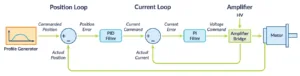
Servomotoren hängen stark von Encodern für Rückkopplungsregelkreise ab, hilft dabei, die genaue Geschwindigkeit und Position beizubehalten, was in Automatisierungs- und Verpackungslinien von entscheidender Bedeutung ist.
Encoder finden sich auch in Großanwendungen wie z Aufzüge, Kräne, und Windkraftanlagen, Dort überwachen sie die Drehung und Position der Welle, um mechanische Ausfälle zu verhindern und die Effizienz zu optimieren.
Im medizinischen Bereich, Diese Geräte sind eingebaut Präzisionsinstrumente und Diagnosegeräte wo genau, Wiederholbare Bewegungen sind lebenswichtig.
Endlich, der Aufstieg von Elektrofahrzeuge und E-Mobilitätslösungen verlässt sich auf Encoder, um die Motorsteuerung und die Batterieeffizienz zu verwalten, bessere Leistung und größere Reichweite.
Über diese vielfältigen Anwendungen hinweg, Encoder sorgen dafür, dass Systeme zuverlässig und präzise arbeiten, Dies macht sie in der heutigen technologiegetriebenen Welt unverzichtbar.
Hauptvorteile der Verwendung von Encodern in Bewegungssystemen
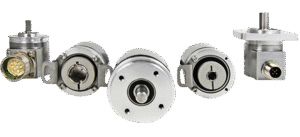
Encoder-Vorteile in Bewegungssteuerungssystemen
Encoder spielen eine entscheidende Rolle bei der Verbesserung von Bewegungssystemen, indem sie präzise Positions- und Geschwindigkeitsrückmeldungen liefern. Hier erfahren Sie, warum sie so wichtig sind:
-
Präzise Positions- und Geschwindigkeitskontrolle
Encoder wandeln mechanische Bewegungen in elektrische Signale um, Dadurch können Systeme genau wissen, wo sich etwas befindet und wie schnell es sich bewegt.
-
Verbesserte Wiederholbarkeit und Genauigkeit
Mit einem Encoder, Maschinen können mit minimalem Fehler wiederholt zur gleichen Position zurückkehren, was bei der CNC-Bearbeitung und Automatisierung von entscheidender Bedeutung ist.
- Regelung mit geschlossenem Regelkreis vs. Regelung mit offenem Regelkreis
| Kontrolltyp |
Beschreibung |
Encoder-Rolle |
| Open-Loop |
Befehle ohne Rückmeldung gesendet |
Kein Encoder erforderlich |
| Geschlossener Kreislauf |
Feedback zur Bewegungsanpassung |
Encoder liefert Echtzeitdaten |
Encoder ermöglichen es Closed-Loop-Systemen, sich ständig auf Fehler einzustellen, Dies führt zu einer gleichmäßigeren und zuverlässigeren Bewegung.
- Energieeffizienz und reduzierter Verschleiß
Durch genaue Steuerung der Bewegung, Encoder helfen Motoren, Überlastung zu vermeiden, Das spart Energie und verlängert die Lebensdauer mechanischer Teile.
Verwendung eines Encoders, wie sie beispielsweise in gängige Servomotoren oder Industrieantriebe integriert sind Siemens-Motor 1F1FK7063, sorgt dafür, dass Ihr System intelligenter und länger läuft.
Inkrementell vs. absolut – Schnellvergleichstabelle
| Besonderheit |
Inkrementalgeber |
Absolutwertgeber |
| Positionsverfolgung |
Benötigt Kraft, um die Position zu halten |
Behält die exakte Position ohne Strom bei |
| Ausgabe |
Hülsenfrüchte (zählt Bewegungsschritte) |
Eindeutiger Positionswert (digitaler Code) |
| Auflösung |
Impulse pro Umdrehung (PPR) |
Hängt von den Bits ab (kann sehr hoch sein) |
| Auswirkungen von Stromausfällen |
Position geht beim Ausschalten verloren |
Position bleibt dauerhaft erhalten |
| Kosten |
Im Allgemeinen niedriger |
Normalerweise höher |
| Geschwindigkeit |
Hohe Geschwindigkeit, gut für Zeitraffer |
Etwas langsamer, aber präzise |
| Anwendungsfälle |
Grundlegende Bewegungssteuerung, kostensensibel |
Sicherheitskritisch, Präzise Positionsrückmeldung |
| Signaltyp |
Quadratursignale (A, B, Z) |
Digitaler Ausgang (SSI, BiSS, EnDat-Protokolle) |
Beide Arten von Encodern spielen in Bewegungssystemen eine entscheidende Rolle. Ihre Wahl hängt von Faktoren wie Genauigkeitsanforderungen ab, Budget, und wenn Sie eine Positionserhaltung nach dem Herunterfahren benötigen. Für Anwendungen wie CNC-Maschinen oder Servosysteme, Inkrementalgeber bieten schnell, kostengünstige Steuerung, Absolutwertgeber hingegen zeichnen sich dort aus, wo Sicherheit und genaue Position von entscheidender Bedeutung sind.
Weitere Informationen zu Motion-Control-Komponenten, siehe die Produktdetails zur Fanuc I/O-Einheit die häufig in Encoder in Industrieanlagen integriert werden.
Optische vs. magnetische Encoder – welcher gewinnt?
Bei der Auswahl eines Encoders, Die Entscheidung kommt oft darauf an optische vs. magnetische Encoder, jedes mit seinen Stärken und Schwächen. Hier ist eine einfache Aufschlüsselung, die Ihnen bei der Entscheidung helfen soll:
| Besonderheit |
Optische Encoder |
Magnetische Encoder |
| Genauigkeit & Auflösung |
Sehr hoch (feine Linien auf Scheiben) |
Mäßig, aber besser |
| Haltbarkeit |
Staubempfindlich, Schmutz, und Feuchtigkeit |
Hervorragend in rauen Umgebungen, schmutzige Umgebungen |
| Kosten |
Normalerweise teurer |
Im Allgemeinen kostengünstiger |
| Geschwindigkeit |
Hochgeschwindigkeitsfähigkeit |
Gut, aber nicht immer so schnell |
| Typische Verwendung |
Sauber, kontrollierte Umgebungen (z.B., CNC-Maschinen) |
Industrielle Automatisierung, Outdoor- und Heavy-Duty-Umgebungen |
Wann sollte man sich für einen magnetischen Encoder entscheiden?
Magnetische Encoder sind die erste Wahl, wenn Ihr Projekt ansteht extreme Bedingungen wie zum Beispiel:
- Staubige oder schmutzige Umgebungen
- Vibrations- und Stoßeinwirkung
- Feuchtigkeit oder Wasserspritzer
- Temperaturschwankungen
Weil magnetische Encoder eher auf Magnetfeldern als auf Licht basieren, Sie sind unter diesen rauen Bedingungen von Natur aus robuster und zuverlässiger. Zum Beispiel, wenn Sie mit arbeiten Industrierobotik oder Outdoor-Windkraftanlagen, Magnetische Encoder sind oft die bessere Wahl.
Auf der anderen Seite, wenn Ihr System es erfordert ultrapräzises Feedback in einer sauberen Umgebung, wie ein Servomotor-Feedbacksystem, optische Encoder glänzen.
Für ein praktisches Beispiel eines hochwertigen magnetischen Encoders, Schauen Sie sich die an Mitsubishi Absolutwertgeber TS5691N1170 das Haltbarkeit mit Genauigkeit verbindet.
Die Wahl zwischen optischen und magnetischen Encodern hängt weitgehend von der Umgebung Ihrer Anwendung ab, Budget, und Präzisionsanforderungen.
So wählen Sie den richtigen Encoder für Ihr Projekt aus
Die Auswahl des richtigen Encoders kann schwierig sein, aber die Konzentration auf ein paar Schlüsselfaktoren macht es einfacher. Hier sind 7 praktische Kriterien um Ihnen bei der Entscheidung zu helfen:
| Auswahlkriterien |
Was Sie beachten sollten |
| Auflösung |
Bestimmt die Genauigkeit – höhere Impulse pro Umdrehung (PPR) bedeutet eine feinere Kontrolle. |
| Umfeld |
Hart oder schmutzig? Wählen Sie magnetische oder robuste optische Encoder. |
| IP-Bewertung |
Wird für Staub- oder Wasserbeständigkeit benötigt; Typische Schutzarten sind IP65, IP67, oder höher. |
| Geschwindigkeit |
Stellen Sie sicher, dass der Encoder die maximale Drehzahl Ihres Systems ohne Signalverlust unterstützt. |
| Ausgabetyp |
Passen Sie Signale wie Quadratur an, SSI, oder analog zu Ihrer Steuerung oder SPS. |
| Größe & Montage |
Berücksichtigen Sie Platzbeschränkungen und Montageart (Welle oder hohl). |
| Budget |
Kosten, erforderliche Funktionen und Haltbarkeit in Einklang bringen. |
Checkliste für die schnelle Encoderauswahl
- Bestätigen Sie Ihre gewünschte Auflösung (PPR oder Bits)
- Prüfen Sie, ob die Umgebung einen optischen oder magnetischen Typ erfordert
- Überprüfen Sie die IP-Einstufung auf Schutzbedarf
- Passen Sie die Ausgangssignale an Ihre bestehenden Systemanforderungen an
- Bestätigen Sie, dass die physische Größe zu Ihrem Maschinendesign passt
- Bestimmen Sie die maximale Wellengeschwindigkeit
- Legen Sie ein realistisches Budget basierend auf den Encoder-Spezifikationen fest
Für eine engere Integration mit CNC-Maschinen oder Automatisierungseinrichtungen, Schauen Sie sich zum Beispiel Encoder-Optionen an, die mit gängigen Systemen wie SIMATIC-Steuerungen kompatibel sind, Die Siemens-Display 6AV2124-0MC01-0AX0 Hilft bei der Visualisierung des Feedbacks von Encodern in Echtzeit.
Die Verwendung dieser Richtlinien trägt dazu bei, sicherzustellen, dass der von Ihnen gewählte Encoder Präzision liefert, Zuverlässigkeit, und langfristige Leistung für Ihre spezifischen Projektanforderungen.
Häufige Mythen und Missverständnisse über Encoder
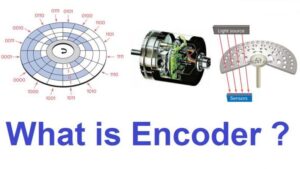
Encoder-Mythen und Fakten erklärt
Encoder sind in der Bewegungssteuerung unerlässlich, Doch mehrere Mythen können Käufer und Nutzer verwirren. Lassen Sie uns einige häufige Missverständnisse klären:
-
„Ein höherer PPR ist immer besser.“
Impulse pro Umdrehung (PPR) bestimmt die Auflösung eines Encoders, Aber mehr Impulse bedeuten nicht immer eine bessere Leistung. Ein extrem hoher PPR kann das Signal verrauschen und die Verarbeitungsanforderungen erhöhen, die für Ihre Bewerbung möglicherweise nicht erforderlich sind. Wählen Sie ein PPR, das den Genauigkeitsanforderungen Ihres Systems entspricht, ohne die Dinge zu verkomplizieren.
-
„Absolutwertgeber sind für die meisten Anwendungen zu teuer.“
Während Absolutwertgeber in der Regel mehr kosten als Inkrementalgeber, Ihre Vorteile – wie z. B. dass sie nach einem Stromausfall nie ihre Position verlieren und erhöhte Sicherheit – können auf lange Sicht Geld sparen, indem sie Ausfallzeiten und Wartungsaufwand reduzieren. Für kritische Systeme, Die Investition lohnt sich oft.
-
„Resolver sind dasselbe wie Encoder.“
Resolver und Encoder liefern beide eine Positionsrückmeldung, funktionieren jedoch unterschiedlich. Resolver nutzen analoge Signale und sind in rauen Umgebungen äußerst robust, während Encoder digitale Impulse mit Optionen höherer Auflösung ausgeben. Wenn Sie die Unterschiede kennen, können Sie das richtige Gerät für Ihr Projekt auswählen.
Wenn Sie diese Punkte verstehen, können Sie bei der Auswahl von Motor-Encodern oder Positionsrückmeldungsgeräten intelligentere Entscheidungen treffen. Zum Beispiel, wenn Sie auf der Suche nach Zuverlässigkeit sind Yaskawa Sie benötigen Optionen für Motor-Encoder oder benötigen Lösungen, die für anspruchsvolle Industrieumgebungen geeignet sind, Es ist ratsam, diese Fakten im Voraus zu berücksichtigen.
Die Zukunft der Encoder-Technologie
Die Encoder-Technologie entwickelt sich schnell weiter, um den Anforderungen moderner Automatisierung und Präzisionssteuerung gerecht zu werden. Ein wichtiger Trend ist Miniaturisierung, Dadurch werden Encoder kleiner und leichter, ohne dass die Genauigkeit darunter leidet. Dies ist für die Kompaktrobotik von entscheidender Bedeutung, Drohnen, und eingebettete Systeme, bei denen der Platz knapp ist.
Gleichzeitig, On-Axis-Designs werden immer beliebter. Diese Encoder passen direkt auf die Motorwelle, Reduzierung mechanischer Verbindungen und Verbesserung der Zuverlässigkeit. On-Axis-Encoder reduzieren den Installationsaufwand und bieten ein hervorragendes Feedback, Dies eignet sich hervorragend für eine strengere Bewegungssteuerung in Maschinen.
Eine weitere aufregende Entwicklung ist der Aufstieg von IO-Link und Einkabellösungen. Diese vereinfachen die Verkabelung durch die Kombination der Leistung, Daten, und Signalübertragung in einem Kabel. IO-Link ermöglicht die intelligente Kommunikation mit Steuerungssystemen, was eine einfachere Einrichtung ermöglicht, Diagnostik, und Wartung – ein großes Plus für Industrieanwender, die die Betriebszeit optimieren.
Schließlich, integrierte lagerlose Encoder versprechen längere Lebensdauer und weniger Reibung. Durch den Wegfall des Geberlagers, Diese Konstruktionen reduzieren den Verschleiß und den Wartungsaufwand und sorgen gleichzeitig für eine präzise Positionsrückmeldung.
All diese Fortschritte machen Positionsgeber intelligenter, kompakter, und einfacher zu integrieren – perfekt für die Zukunft der Automatisierung, Robotik, und fortschrittliche Fertigung.
Für anspruchsvolle Industrieanwendungen, Erkundung von Optionen wie dem Siemens SKP15 Encoder kann Spitzenleistung bieten, die mit diesen neuen Technologien übereinstimmt.

 von
von