Blog

Decoding the Juice: Powering Your Siemens S7-200

This document details the power requirements and considerations for the Siemens S7-200 PLC, emphasizing the importance of accurate power calculations to prevent system failures.

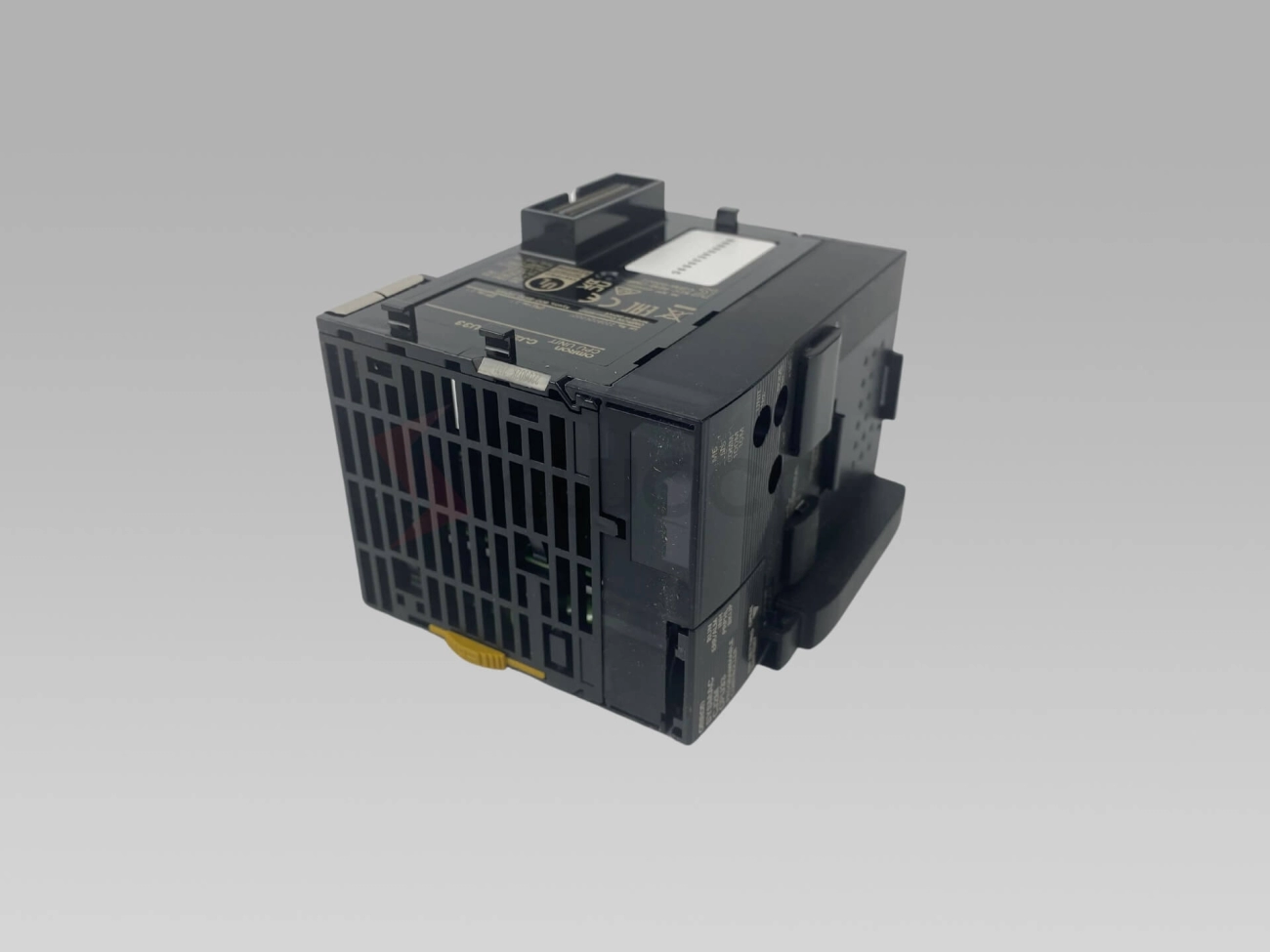
6ES7231-7PC22-0XA0 Siemens S7-200, ANALOG INPUT EM 231, 4AI, PT100/200/500/1000/10000 NI100/120/1000, CU10, 14 GOST, RESISTANCE

An example of a Siemens S7-200 PLC module, showcasing its compact design.

I. Introduction: The Importance of Proper Powering

  • The Siemens S7-200 is a compact, cost-effective PLC that was a staple in industrial automation for smaller tasks.
  • Providing the correct power is crucial for the PLC’s functionality, as insufficient or incorrect power can lead to PLC damage, intermittent operations, and unscheduled downtime.

II. The S7-200’s History and Evolution

  • Introduced in 1994, the S7-200 succeeded the S5 series, offering increased compactness and cost-effectiveness.
  • Programming was done using STEP 7-Micro/WIN.
  • Regional variants like the S7-200 SMART were developed for specific markets.
  • The S7-200 officially entered its “retirement” phase in 2017 due to limitations in processing power, memory, and connectivity compared to newer technologies.

III. Technical Power Specifications of the S7-200

Power Input:

CPUs were available with either AC power input or required a 24V DC supply.

Internal Power Distribution:

  • The CPU generates an internal 5V DC supply for its expansion modules.
  • It typically provides a limited 24V DC output for external sensors and actuators.

Power Consumption:

  • The CPU itself consumes approximately 10-20W. A reported figure of 14,000 Watts is considered a likely typo.
  • Expansion modules consume minimal power from the internal 5V DC supply.
  • External sensors, actuators, and field devices connected to the 24V DC supply are the primary power consumers.

IV. Power Calculation Checklist

Accurate power calculations are essential for selecting the correct power supply and preventing system failures.

  1. CPU Power Consumption: Consult the CPU’s datasheet for its base power draw.
  2. Expansion Module Current: Sum the 5V DC current requirements of all expansion modules.
  3. External Device Current: Calculate the total current drawn by all sensors and actuators from the 24V DC supply.
  4. Total External 24V DC Requirement: Sum the power consumption of the CPU, expansion modules, and external devices to determine the external 24V DC power supply needs.
  5. Safety Margin: Always add a 20-30% safety margin to account for power surges, component aging, and future expansion.
  6. Verification: It is advisable to verify actual power consumption through testing, as real-world conditions can differ from datasheet specifications.

V. S7-200 Power Pitfalls and Best Practices

Power Pitfalls

User Experience:

Users emphasize the S7-200’s limited power capabilities, necessitating careful planning.

Internal vs. External 24V DC Supply:

  • Internal: Convenient for powering small, low-power devices.
  • External: Recommended for safety, isolation, fault management, and when powering more than a few devices.

Catastrophic Connections:

Never connect AC power to the 24V DC sensor output (L+ and M); this will cause instantaneous and irreparable PLC damage. Always verify wiring diagrams.

Power Gremlins:

  • Surges & Spikes: Can cause intermittent errors and component degradation.
  • Aging Components: Old power supply boards may have leaky capacitors, leading to voltage fluctuations.
  • Overloading: Attempting to power too many devices from the internal supply causes instability.

Best Practices

  • Triple-check wiring connections with a multimeter.
  • Install fuses for overcurrent protection.
  • Prioritize dedicated external power supplies.
  • Ensure proper grounding.
  • Implement surge protectors and UPS units.
  • Maintain physical separation between power and signal cables.

VI. Legacy and Successors

  • Migrating from an S7-200 requires careful planning, code conversion, and hardware upgrades.
  • S7-1200: Considered the official replacement, offering improved power management, integrated Ethernet, and the TIA Portal software.
  • S7-1500: For high-performance applications, featuring robust modular power management (separate supplies for internal logic and external loads) and redundancy options.
  • S7-200 SMART: A compatible and cost-effective option for extending existing systems, often serving as a stepping stone to the S7-1200.
  • Newer PLC generations have evolved robust and scalable power architectures based on lessons learned from the S7-200.

VII. Conclusion

  • Accurate power calculation and management are essential for reliable S7-200 operation.
  • The S7-200, while a significant device in automation history, requires careful power planning due to its limitations.
  • The principles of power management learned from the S7-200 are applicable to all PLC systems, emphasizing the importance of “powering smart” to “automate strong.”

Related posts