Servo Drive Controller Guide Mastering Precision Motion Control
If you work in automation or robotics, you know that servo drive controllers are the unsung heroes behind every precise motor movement. But what exactly...

Programmable Logic Controllers (PLCs) are essential components in industrial automation, providing reliable control over machinery and processes. Understanding the different types of PLCs is crucial for selecting the best fit for your automation needs. The three main categories of PLCs are Modular, Compact, and Integrated. Each type has unique design features and functionalities that make them suitable for various applications.
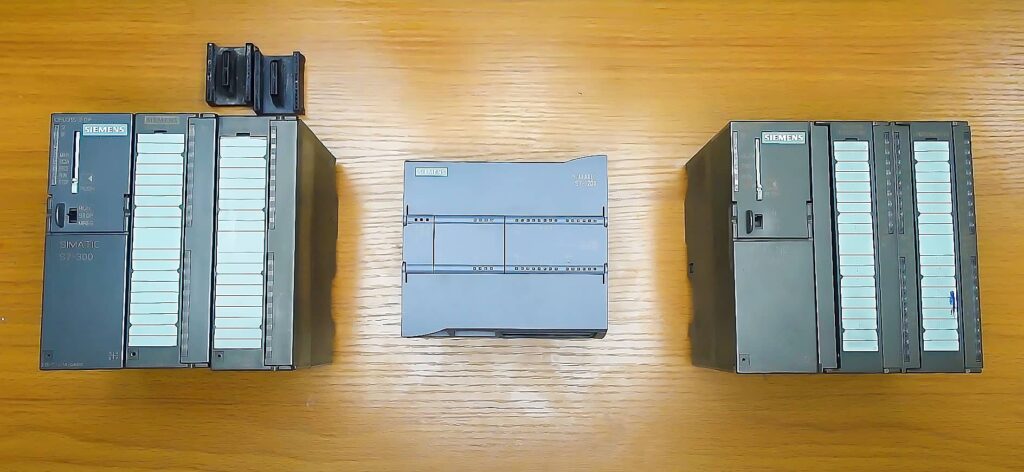
MODULAR COMPACT AND INTEGRATED PLCs
What is a Modular PLC?
A modular PLC consists of separate components that can be individually connected or replaced. The key components include the CPU and other function modules such as Digital Input (DI), Digital Output (DO), and Analog Output (AO) modules.
Key Features:
CPU and modules are separable
Modules are connected using a bus connector
Offers flexibility to add or remove modules as needed
Can act as both modular and compact PLC depending on configuration
How It Works:
To assemble a modular PLC, the CPU is connected to individual modules (DI, DO, AO) using a bus connector. This offers customization and scalability, allowing users to add modules by simply connecting them via the bus connector without difficulty.
What is a Compact PLC?
A compact PLC integrates the CPU and the I/O modules in a single unit. It is designed to be more streamlined and space-saving compared to modular PLCs.
Key Features:
CPU is housed on the same body as the input/output modules
Contains DI, DO, and AO modules integrated
Typically used in smaller, less complex automation applications
Advantages:
Easier to install and wire since the modules and CPU are integral
Reduced wiring complexity
Saves physical space
What is an Integrated PLC?
At first glance, integrated PLCs might seem similar to modular PLCs; however, integrated PLCs have inseparable components, distinguished by their fixed design.
Key Features:
CPU and modules are inseparable (fixed configuration)
Compact design with limited expandability
Often used in applications where minimal customization is required
| Feature | Modular PLC | Compact PLC | Integrated PLC |
|---|---|---|---|
| CPU & Modules | Separable | On the same body | Inseparable |
| Expandability | High (add/remove modules) | Limited | Very limited |
| Installation Complexity | Moderate (wiring bus connectors) | Low (single unit) | Very low (fixed unit) |
| Typical Applications | Complex/Custom systems | Medium complexity | Simple/fixed applications |
Choosing the right PLC type depends on the complexity of the automation system, budget, space, and future expansion needs:
Modular PLCs → provide the most flexibility and scalability, ideal for complex systems.
Compact PLCs → offer a balanced solution for medium-sized applications with limited space.
Integrated PLCs → best suited for simple and fixed systems, where expandability and customization are not priorities.
Understanding these distinctions helps engineers and technicians select the most effective and efficient control system for their specific industrial automation projects.
 by
by