Cómo funcionan los codificadores rotativos
¿Alguna vez se ha preguntado cómo una máquina CNC sabe exactamente dónde está colocada la herramienta hasta el micrón?? Todo se reduce a la Codificador rotatorio. Como fabricante especialista en control de movimiento, Veo estos dispositivos como el sistema nervioso de la automatización industrial.. Traducen el movimiento físico mecánico en señales eléctricas que su controlador realmente puede entender..
En el centro de nuestra Codificadores ópticos, El mecanismo se basa en una interacción precisa de tres componentes principales.:
- Fuente de luz: Un haz LED enfocado proporciona un flujo de luz constante.
- Disco de código: Este es el corazón del sensor.. es un disco giratorio (a menudo vidrio o metal) grabado con líneas o hendiduras precisas. A medida que el eje gira, este disco gira, Cortar el haz de luz en pulsos intermitentes..
- Matriz de fotodetectores: Sentado al otro lado del disco, Estos sensores detectan los patrones alternos de luz y oscuridad..
Esta interacción genera Ondas cuadradas. En una configuración estándar, El detector convierte los pulsos de luz en señales eléctricas., normalmente generando Salida en cuadratura (Fase A y Fase B). Al leer estos pulsos de encendido y apagado, Su PLC o sistema de accionamiento puede calcular instantáneamente la velocidad., dirección, y posición relativa. Si es un trabajo pesado Sensor de posición giratorio para un ascensor o una unidad de alta precisión para robótica, el principio fundamental sigue siendo la conversión fiable de la rotación en datos digitales.
Óptico vs.. Detección magnética
Al seleccionar un Codificador rotatorio, La decisión a menudo se reduce al mecanismo de detección interno.. Generalmente los clasificamos en dos tecnologías principales.: óptico y magnético. Su elección depende enteramente del equilibrio entre precisión extrema y resiliencia ambiental..
Codificadores ópticos son el estándar para el control de movimiento de alta precisión. Utilizan una fuente de luz., un disco de código marcado, y un fotodetector para generar señales. Este diseño permite una resolución y precisión increíblemente altas.. Si está equipando una precisión servomotor fanuc para una aplicación CNC, una unidad óptica suele ser la mejor opción. Proporcionan una inmunidad superior a las interferencias contra campos magnéticos., pero requieren un ambiente relativamente limpio ya que el polvo o el aceite pueden obstruir el camino óptico.
Codificadores magnéticos, por otro lado, están construidos para la rutina. Estos sensores utilizan campos magnéticos y tecnología de efecto Hall para rastrear la rotación.. Porque no dependen de la óptica de línea de visión, son robustos y resistentes a la suciedad, grasa, humedad, y fuertes vibraciones. Mientras que un magnético Sensor de posición giratorio Es posible que no siempre coincida con la resolución ultra alta de una versión óptica., A menudo es la opción más confiable para trabajos pesados. Componentes de automatización industrial operando en condiciones duras, condiciones sucias.
Comparación clave:
- Óptico: Lo mejor para alta resolución, respuesta rápida, e inmunidad al campo magnético. Ideal para una fabricación limpia.
- Magnético: Lo mejor para la resistencia a los golpes, durabilidad, y ambientes hostiles (polvo/aceite/agua). Ideal para maquinaria pesada.
incremental frente a. Codificador absoluto
Seleccionar el sensor adecuado para su configuración de automatización generalmente se reduce a la batalla de incremental frente a. Codificador absoluto tecnología. Guiamos a los clientes a través de esta decisión diariamente., ya que la elección dicta cómo su máquina maneja los datos de posicionamiento y las interrupciones de energía. Si bien ambos tipos siguen la rotación, desempeñan funciones fundamentalmente diferentes en el control de movimiento industrial.
Aquí está el desglose de cómo funcionan estas distintas tecnologías.:
- Codificadores incrementales: Estos son el estándar de la industria para el monitoreo de velocidad y distancia relativa.. Emiten una corriente de pulsos a medida que el eje gira., a menudo utilizando un Pulso de referencia cero (fase Z) para marcar una posición de inicio. La principal compensación es la memoria.; si se va la luz, el codificador “olvida” su ubicación, Requerir que la máquina realice una secuencia de inicio al reiniciar..
- Codificadores absolutos: Esencial para aplicaciones complejas, Estos dispositivos asignan una firma digital única, a menudo utilizando Código gris o binario: a cada ángulo específico del eje. Esto permite que el sensor conserve su posición exacta incluso después de una pérdida total de energía.. Esta capacidad es crítica para una alta precisión. Sistema de retroalimentación CNC o brazo robótico multieje donde el realojamiento es peligroso o requiere mucho tiempo.
Ya sea que necesite un modelo absoluto de una sola vuelta para una junta robótica o una unidad incremental estándar para una cinta transportadora, Proporcionamos soluciones que se integran perfectamente con los principales fabricantes internacionales que figuran en nuestra listado completo de marcas.
Coincidencia de especificaciones con la aplicación: PPR, Voltaje, y salida
Cuando ayudo a los clientes a seleccionar el producto correcto Codificador rotatorio, Empezamos mirando la resolución., específicamente el Pulsos por revolución (PPR). Este número define cuántos pulsos de onda cuadrada genera el dispositivo en un giro completo de 360 grados.. Es un acto de equilibrio; mientras que un PPR alto ofrece una mayor precisión para el mecanizado CNC, Requiere un controlador capaz de manejar entradas de alta frecuencia.. Para un control sencillo de la velocidad en una cinta transportadora, una resolución estándar suele ser más que suficiente y más fácil de gestionar.
Próximo, Tenemos que hacer coincidir el voltaje y la lógica de salida con su entorno de control específico.. Hacer esto mal es la razón más común de falla en la instalación.
- Requisitos de voltaje: La mayoría de nuestros codificadores funcionan con CC 5 V o una gama más amplia de CC 8-30 V. Debe verificar su dispositivo receptor: conectar un codificador de 5 V a una fuente industrial de 24 V dañará la unidad instantáneamente.
- TTL (Controlador de línea): Esta es la opción ideal para entornos con mucho ruido o cables largos.. Utiliza señales diferenciales. (A, A-, B, B-) para anular las interferencias eléctricas.
- HTL (Empujar-tirar): Normalmente recomendamos esto para la automatización industrial estándar donde el codificador se conecta directamente a una interfaz de 24 V..
- Coleccionista abierto: Ideal si su codificador y controlador operan a diferentes potenciales de voltaje.
Si está integrando retroalimentación en un sistema de automatización complejo, como cableado de entradas a un PLC Siemens S7-1200, verificando que el tipo de salida del codificador (NPN o PNP) coincide con el módulo de entrada del PLC es fundamental para una detección de señal confiable. Ofrecemos fases A, B, y Z (referencia cero) en estos modelos para garantizar la compatibilidad con prácticamente cualquier contador o unidad.
Selección de interfaz eléctrica
Seleccionar la salida eléctrica correcta para su Codificador rotatorio Es tan importante como el equipamiento mecánico.. Si la señal de salida no coincide con los requisitos de entrada de su controlador, te enfrentarás a la pérdida de señal, conteos perdidos, o posibles daños al hardware. Ofrecemos varios tipos de circuitos de salida para adaptarse a entornos de automatización específicos., distinguir principalmente entre inmunidad al alto ruido y flexibilidad de voltaje.
Salida del controlador de línea (TTL)
Para aplicaciones que requieren largos recorridos de cables o que funcionan en entornos eléctricamente ruidosos, el Salida del controlador de línea es el estándar de la industria. Esta interfaz utiliza una señal diferencial. (canales A, A-, B, B-, z, Z-), que anula eficazmente las interferencias.
- Lo mejor para: Servoaccionamientos y sistemas CNC (como fanuc o mitsubishi).
- Voltaje: Normalmente 5 VCC.
- Beneficio: Respuesta de alta frecuencia y transmisión estable a largas distancias (a menudo excediendo 100 metros).
Interfaz de recopilador abierto (NPN/PNP)
Si está integrando directamente con un controlador lógico programable (SOCIEDAD ANÓNIMA) o un módulo contador, el Interfaz de recopilador abierto es a menudo el estándar requerido. Esta configuración actúa como un interruptor y generalmente requiere una resistencia pull-up externa.. Es altamente compatible con amplios rangos de voltaje. (CC 5-30 V), haciéndolo versátil para varios gabinetes de control.
- Lo mejor para: Automatización general y Interfaz PLC conexiones.
- Voltaje: Amplia gama (CC 8-30 V es común).
- Beneficio: Rentable y fácil de cablear para módulos de E/S estándar, como el Unidad base Siemens SIMATIC ET 200SP, asegurando un conteo de pulsos confiable sin acondicionamiento de señal complejo.
Empujar-tirar (HTL)
Por una solución intermedia, nuestra salida Push-Pull ofrece un equilibrio. Proporciona niveles lógicos estables. (Alto/Bajo) Se basa en el voltaje de suministro y, a menudo, puede reemplazar los tipos de colector abierto en sistemas modernos donde se necesita fuente y sumidero de corriente.. Siempre verifique el manual de entrada de su controlador antes de finalizar la especificación..
Factor de forma mecánica: Sólido vs.. Selección de eje hueco
Conseguir el ajuste físico adecuado es tan crucial como cumplir con las especificaciones eléctricas.. Cuando estás seleccionando un Codificador rotatorio para tu configuración, La primera decisión suele recaer en el estilo del eje.. Vemos dos configuraciones principales en el campo., Y elegir el incorrecto puede provocar dolores de cabeza en la instalación o fallos prematuros..
- Codificadores de eje sólido: Estas son la opción tradicional para la automatización general.. Requieren un acoplamiento flexible separado para conectarse al motor o al eje de la máquina.. El acoplamiento es vital porque absorbe ligeras desalineaciones y protege los rodamientos del codificador de tensiones mecánicas.. Si se trata de vibraciones fuertes, un eje sólido con un soporte de montaje robusto suele ser el camino a seguir.
- Codificadores de eje hueco: También conocidos como ejes huecos ciegos o de orificio pasante., Estos se montan directamente en el eje del motor.. Ahorran mucho espacio ya que no necesitan un acoplamiento externo ni soportes adicionales.. Este diseño es estándar para retroalimentación del motor y espacios reducidos en el interior. Piezas de maquinaria CNC.
Disponemos de una amplia gama de diámetros exteriores., desde unidades compactas de 38 mm hasta tamaños industriales de alta resistencia de 100 mm. Ya sea que necesite un eje estándar de 6 mm o un tamaño de orificio personalizado para un motor específico, podemos adaptar el Componentes de automatización industrial para adaptarse a su hardware. Siempre verifique dos veces el diámetro del eje y el patrón de pernos de montaje antes de realizar el pedido para garantizar un reemplazo inmediato..
Generador de impulsos manuales (MPG) para control CNC
A menudo tratamos el generador de impulsos manual (MPG) como un simple accesorio, pero en realidad es un especializado codificador rotatorio diseñado específicamente para la intervención humana. A diferencia de los codificadores de alta velocidad montados en motores, Este volante proporciona a los operadores una precisión, control táctil sobre los ejes de las máquinas CNC. Cuando giras el dial, te sientes distinto “hacer clic” o retén; Esta retroalimentación física es crucial para el posicionamiento manual., permitiendo a los maquinistas poner a cero herramientas o configurar piezas de trabajo con precisión a nivel de micras sin excederse.
Para que un MPG funcione correctamente, debe coincidir con las especificaciones eléctricas de su sistema de control. Ofrecemos unidades compatibles con los principales estándares industriales., asegurando una integración perfecta ya sea que se conecte a una interfaz Fanuc o a un Sistema PLC Siemens.
Especificaciones clave de MPG:
- Resolución: Típicamente 100 PPR (Pulsos por revolución) o 25 PPR, adaptado al engranaje del controlador.
- Opciones de voltaje: Disponible en CC 5V, 12V, o 24V para adaptarse a diferentes tarjetas de entrada.
- Tipos de salida: Salidas de controlador de línea diferencial o de voltaje para evitar la pérdida de señal a través de cables enrollados.
- Durabilidad: Construido para resistir el aceite, polvo, y manipulación constante en entornos de taller hostiles.
Instalación y solución de problemas
Obtener el mejor rendimiento de un Codificador rotatorio generalmente se reduce a dos cosas: cableado limpio y montaje mecánico preciso. Lo vemos todo el tiempo: se culpa a sensores en perfecto estado por problemas que en realidad son causados por ruido eléctrico o desalineación física.. Cuando estás configurando tu sistema de automatización, Tratar la ruta de la señal con cuidado es fundamental..
Cableado y protección contra ruido
Ruido electrico (EMI) es el enemigo de la retroalimentación precisa. Si su controlador cuenta pulsos cuando el motor no está en movimiento, probablemente estés tratando con “pulsos fantasma” causado por interferencia. Para evitar esto, siempre uso cables de par trenzado blindados. El blindaje debe estar conectado a tierra correctamente, normalmente en el extremo del receptor. (el lado del variador o del PLC) en lugar del extremo del codificador, para drenar la interferencia de manera efectiva.
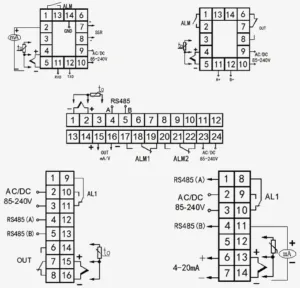
Al conectar su codificador al sistema de control, asegúrese de que su cableado siga el código de color específico para el A, B, y fases Z. Este proceso requiere la misma atención al detalle que un proceso estándar. Instalación de tarjeta de E/S para garantizar que las señales se lean correctamente sin rebotes ni retrasos.
Alineación mecánica
El estrés físico mata a los codificadores más rápido que cualquier otra cosa. Ya sea que utilice un modelo de eje macizo o de eje hueco, nunca fuerce la unidad en su lugar.
- Eje sólido: Utilice siempre un acoplamiento flexible entre el eje del codificador y el eje del motor. Esto absorbe ligeras desalineaciones y evita que la carga destruya los cojinetes internos..
- Eje hueco: Asegúrese de que la placa de resorte (atar) está asegurado sin tensión. Si el eje se tambalea, desgastará el disco óptico o el sensor magnético del interior.
Consejos comunes para la resolución de problemas
Si su sistema no se comporta, revise esta lista de verificación rápida antes de reemplazar la unidad:
- Posición de deriva: Compruebe si el acoplamiento está flojo o resbala en el eje..
- Conteo errático: Verifique que la conexión a tierra del escudo sea segura y no cree un bucle de tierra..
- Sin señal: Confirme que el voltaje de la fuente de alimentación coincida con las especificaciones del codificador. (p.ej., no alimente 24 V a un controlador de línea TTL de 5 V).
Compatibilidad de marcas y codificadores de repuesto
En el vertiginoso mundo de Componentes de automatización industrial, el tiempo de inactividad de la máquina es el enemigo. Cuando falla un sensor crítico en su línea de producción, semanas de espera para un fabricante de equipos originales (OEM) parte no sólo es inconveniente: acaba con la rentabilidad. Entendemos esa urgencia. Por eso nos especializamos en la fabricación. Codificadores rotativos diseñado como directo, Reemplazos directos para los principales sistemas internacionales..
Diseñamos nuestros sensores para que coincidan con las especificaciones eléctricas y mecánicas precisas de los gigantes de la industria.. Si necesitas un Compatible con Fanuc unidad para torno o reemplazo de un servomotor Mitsubishi, Proporcionamos soluciones que le permiten volver a funcionar inmediatamente. Obtienes la misma resolución, las mismas señales de salida, y la misma durabilidad sin el alto margen de beneficio de la marca ni plazos de entrega prolongados..
¿Por qué elegir nuestros repuestos compatibles??
- Integración perfecta: Nuestros codificadores coinciden con el tamaño del eje, patrón de pernos de montaje, y cableado de pines estándar Piezas de maquinaria CNC.
- Tiempo de inactividad reducido: Disponemos de configuraciones comunes para evitar retrasos en la cadena de suministro global.
- Soporte del sistema: Más allá de los codificadores, funcionamos como un Proveedor confiable de disyuntores Siemens para garantizar que todo su gabinete de control permanezca operativo.
Cambiando a alternativas compatibles de alta calidad, usted mantiene la precisión de su equipo CNC mientras toma el control de su programa de mantenimiento.
Preguntas frecuentes sobre codificadores rotatorios
Nos encontramos con muchas preguntas específicas de ingenieros y equipos de mantenimiento que intentan mantener sus líneas en funcionamiento.. Ya sea que esté tratando con un Sistema de retroalimentación CNC o una configuración sencilla del transportador, obtener los detalles correctos es importante. Aquí están las respuestas a las consultas técnicas más comunes que recibimos sobre Codificadores rotativos.
¿Cómo leo el diagrama de cableado correctamente??
Nunca asuma que los códigos de color son universales. Mientras nos atenemos a los estándares industriales, el código de colores para A, B, y fases Z puede variar entre fabricantes. Consulte siempre la etiqueta en el cuerpo del codificador o la hoja de datos proporcionada.
- Fuerza (vcc & 0V): Vuelva a verificar su voltaje. Conexión de 24V a 5V Salida del controlador de línea dañará la unidad inmediatamente.
- Cables de señal: Asegúrese de que su Fase A y Fase B estén conectadas a las entradas correctas del contador de alta velocidad..
- Blindaje: El cable de drenaje debe estar conectado a tierra específicamente en el extremo del receptor. (PLC o unidad) para drenar el ruido de manera efectiva.
- Integración: Al cablear un codificador a un armario de control complejo, como conectarse a un Unidad de E/S Fanuc, Verifique que el módulo de entrada admita el tipo de salida del codificador. (PNP, PNP, o diferencial).
¿Por qué la señal de mi codificador se desvía o se muestra? “fantasma” legumbres?
Esto es casi siempre interferencia de señal o EMI (Interferencia electromagnética). En un taller concurrido con VFD y motores pesados, El ruido eléctrico puede inducir recuentos falsos..
- Enrutamiento de cables: Nunca coloque cables de codificador en el mismo conducto que líneas eléctricas de alto voltaje..
- Tipo de cable: Recomendamos utilizar cables blindados de par trenzado.
- Toma de tierra: Una conexión a tierra inadecuada crea bucles de tierra. Asegúrese de que el marco de la máquina y el cuerpo del codificador compartan un potencial común..
¿Cómo elijo la resolución correcta? (PPR)?
Más alto no siempre es mejor. Elegir lo correcto Pulsos por revolución (PPR) Depende de la precisión requerida y de la velocidad máxima de la aplicación..
- Calcular frecuencia: Fórmula: $(RPM multiplicadas por PPR) / 60 = Frecuencia (Hz)$.
- Verificar límites: Asegúrese de que la frecuencia resultante no exceda la frecuencia de respuesta máxima de su Interfaz PLC o tarjeta de contador.
- Solicitud: Para un posicionamiento preciso en un CNC, Es necesario un PPR alto. Para un control sencillo de la velocidad, una resolución más baja suele ser más estable y rentable.
¿Puedo reemplazar una marca específica con su codificador??
Sí. Nos especializamos en OEM/ODM Soluciones y pueden coincidir con las especificaciones mecánicas y eléctricas de las principales marcas internacionales.. Si necesita reemplazar un codificador defectuoso en un mitsubishi Servomotor o motor Siemens., Podemos configurar el tamaño del eje. (sólido o hueco), estilo de brida, y lógica de salida (TTL/HTL) para proporcionar un reemplazo directo. Esto minimiza el tiempo de inactividad sin los plazos de entrega asociados a menudo con piezas OEM de renombre..


 por
por