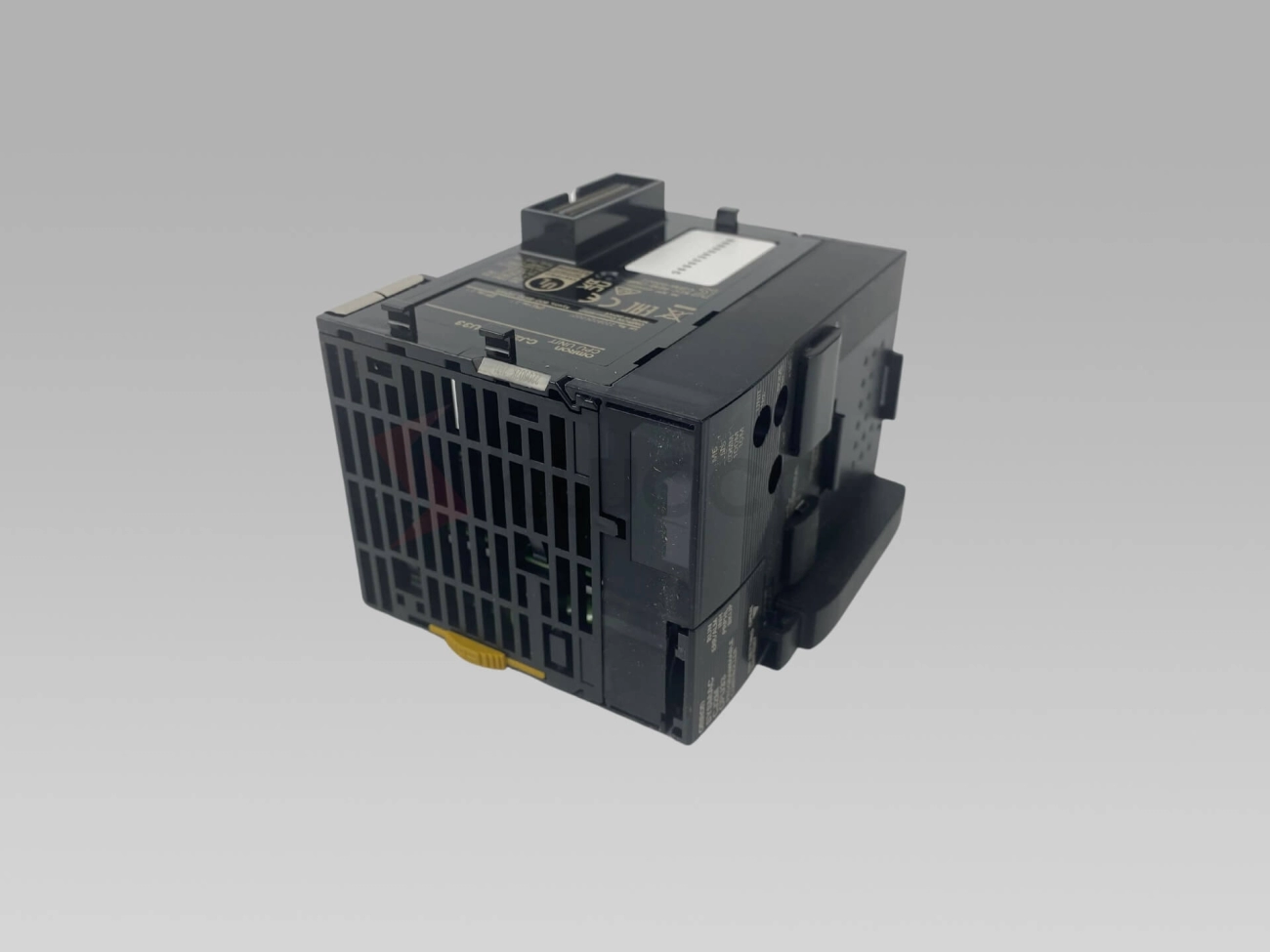
Snapshot of the Siemens 6SL3120-2TE13-0AA4
When a production line halts due to a failed drive, every minute counts. We understand the urgency of minimizing machine downtime, which is why we prioritize the immediate availability of the Siemens 6SL3120-2TE13-0AA4. As a critical component in the SINAMICS S120 drive system, this Double Motor Module is engineered to control two servo motors simultaneously, optimizing control cabinet space without sacrificing performance. Whether you are troubleshooting a fault or building a new multi-axis system, we provide the hardware support you need to get back online.
Quick Look at SINAMICS S120 Double Motor Module Features
This Booksize Motor Module 3A unit is designed for multi-axis applications where precision and compactness are paramount. Unlike single-axis units, the Siemens S120 Double Motor Module allows us to operate two independent axes from a single DC link connection. It features internal air cooling to maintain optimal operating temperatures and utilizes the DRIVE-CLiQ interface for seamless communication with the Control Unit. Key features include:
- Space-saving design: Controls two axes in a single 50mm wide housing.
- Voltage Class: Designed for 600V DC Link voltage.
- Safety Integration: Supports Safety Integrated functions when paired with the appropriate Control Unit.
Understanding the 3A/3A Output Capability
The part number 6SL31202TE130AA4 specifically indicates a dual-output configuration. The “3A/3A” rating signifies that the module delivers a rated output current of 3 Amps to each of the two connected motors independently. This makes the SINAMICS S120 3A/3A drive ideal for handling smaller, high-dynamic servo motors often found in packaging machinery, textile machines, and printing units. It ensures consistent torque and speed control for low-power axes while managing peak loads efficiently.
Current Stock Status and Condition Options
We know that budget constraints and lead times vary for every maintenance project. To meet these diverse needs, we maintain a robust inventory of the 6SL3120-2TE13-0AA4 ready for immediate dispatch.
- New in Box: Factory sealed units for new installations or critical spare parts inventory.
- Refurbished/Used: Fully tested and serviced units offering a cost-effective solution for repairs.
- Exchange Service: Options to trade in your defective unit to reduce replacement costs.
Our team rigorously inspects every module to ensure it meets strict operational standards before it leaves our facility, guaranteeing you receive a reliable component.
Detailed Technical Specifications
When you look at the 6SL3120-2TE13-0AA4 datasheet, you want the hard numbers to ensure this drive fits your specific machine application. This SINAMICS S120 unit is a reliable workhorse for multi-axis systems, balancing compact size with precise power delivery.
Electrical Data: Voltage and Current Ratings
This unit is a Booksize Motor Module 3A double axis drive. It doesn’t connect directly to the AC mains; instead, it pulls power from the DC link (generated by a Smart or Active Line Module) and inverts it for two separate servo motors.
Key Electrical Stats:
| Feature |
Specification |
| Rated Output Current |
2x 3 A (Double Axis) |
| Peak Output Current |
2x 6 A (Short-time) |
| DC Link Voltage |
510 … 720 V DC |
| Output Voltage |
0 … 0.72 x DC Link Voltage |
| Pulse Frequency |
4 kHz (Standard) |
Mechanical Dimensions and Booksize Format
Space is money in control cabinets. This SINAMICS booksize power unit keeps things extremely compact. It utilizes the standard 50mm width profile, allowing you to mount multiple axes side-by-side without wasting panel real estate. As a compact industrial servo amplifier, it saves significant DIN rail space compared to older chassis formats or blocksize drives.
- Width: 50 mm (1.97 in)
- Height: 380 mm (14.96 in)
- Depth: 270 mm (10.63 in) including spacers
- Weight: Approx. 4.6 kg (10.14 lb)
Internal Air Cooling System Details
Heat management is handled by an Internal air cooling motor module design. The unit features an integrated power fan that pulls air across the internal heatsink. You generally do not need external cooling units for this specific module, provided your cabinet maintains the ambient temperature requirements (usually below 40°C/104°F without derating).
DRIVE-CLiQ Interface and Connectivity
Siemens simplified the wiring mess with the DRIVE-CLiQ interface. The 6SL3120-2TE13-0AA4 comes equipped with 3 DRIVE-CLiQ sockets. These RJ45-style ports allow for automatic topology recognition and easy daisy-chaining to the Control Unit (CU320-2) or Motor Modules. This digital connection is robust against electrical noise, ensuring your encoder data and control signals remain clean.
System Compatibility and Integration
Getting the 6SL3120-2TE13-0AA4 up and running within an existing automation lineup is straightforward, provided you understand the architecture. This SINAMICS S120 Double Motor Module is designed to sit neatly in a multi-axis booksize configuration, relying on a central control unit to manage logic and motion profiles.
Connecting to the CU320-2 Control Unit
The module interfaces directly with the CU320-2 Control Unit via the DRIVE-CLiQ system. This digital interface is a game-changer for setup; it automatically detects the Booksize Motor Module 3A, pulling the electronic rating plate data without the need for manual parameter entry. It streamlines the commissioning process significantly. For those building out complex control cabinets, integrating reliable high-quality Siemens PLC module factory solutions alongside these drives ensures seamless communication across the entire machine architecture.
Compatible Siemens Servo Motors
Regarding the load, this Double axis servo drive Siemens unit is optimized for specific synchronous motors. With a 3A output per axis, it isn’t meant for heavy-duty lifting but rather for precision tasks. It pairs perfectly with:
- 1FK7 Series: The standard choice for general motion control applications.
- 1FT7 Series: Ideal for high-performance requirements where dynamic response is critical.
- 1PH8 Induction Motors: Supported, though typically used with higher power ratings.
Replacing the Older 6SL3120-2TE13-0AA3
If you are looking for a Siemens servo drive replacement for the legacy 6SL3120-2TE13-0AA3, the -0AA4 version is the official 6SL3120-2TE13-0AA3 successor. It is fully compatible as a spare part. You can swap the older unit for this newer 6SL31202TE130AA4 without changing the mounting points or the motor cabling. The internal air cooling design remains consistent, making maintenance downtime minimal during the transition.
Installation and Setup Requirements
Getting the 6sl3120-2te13-0aa4 up and running requires attention to detail. Since this is a SINAMICS booksize power unit, the physical and electrical integration must follow strict guidelines to ensure the system handles the 3A/3A output reliably without faulting.
DC Link Busbars and Terminal Adapters
The Siemens S120 Double Motor Module relies on the integrated DC link busbar system for power distribution. You cannot simply wire these loosely; the red and black busbars must be slid into place and tightened to the correct torque specifications to ensure continuity across the drive lineup.
- Busbars: Ensure the module is mounted flush with adjacent units so the DC link bridges connect perfectly.
- 24V Supply: You must use the 24V terminal adapter to feed the electronics power supply; this is often overlooked during rough-in.
- Safety: Always reinstall the red plastic covers over the busbars immediately after tightening to prevent accidental contact.
Proper Motor Cable Shielding for EMC
In US industrial facilities, signal noise can be a nightmare. To keep the Double axis servo drive Siemens from interfering with sensitive sensors or controllers, proper shielding is non-negotiable. You need to ground the motor cable shields right at the module using the dedicated shield connection plate. A 360-degree bond on the shield clamp is required to divert high-frequency noise effectively.
Minimum Firmware Versions for Operation
Before powering up, check your Control Unit. This module communicates via DRIVE-CLiQ and requires compatible firmware to be recognized. If you are using an older CU320, you might need an update.
| Component |
Requirement |
| Control Unit |
CU320-2 DP or CU320-2 PN |
| Firmware Version |
Generally V4.5 or higher (Verify with specific project files) |
| Topology |
Automatic recognition via DRIVE-CLiQ |
Ensuring your firmware matches the hardware revision of the 6sl3120-2te13-0aa4 prevents “Topology Error” faults during the initial commissioning phase.
Frequently Asked Questions (FAQ)
When managing a Siemens S120 Double Motor Module installation, a few common questions always pop up regarding compatibility and configuration. Here are the answers to the most frequent inquiries we receive about the 6SL3120-2TE13-0AA4.
Can I replace the -0AA3 version with this module?
Yes, absolutely. The 6SL3120-2TE13-0AA4 is the direct 6SL3120-2TE13-0AA3 successor. Siemens designed this iteration to be fully backward compatible with the older version. In most applications, you can swap the hardware without needing to completely reconfigure your drive project. The Control Unit (CU320-2) generally recognizes the new module automatically via the DRIVE-CLiQ interface, making the transition seamless for maintenance teams.
Does the 6SL3120-2TE13-0AA4 need an external fan?
No, this specific booksize unit features Internal air cooling. It comes equipped with its own integrated fan assembly designed to manage the thermal load of the 3A/3A output. You do not need to mount an external fan module directly to the drive. However, always ensure your electrical cabinet has sufficient ventilation to handle the heat dissipation from the drive lineup.
What are the pulse frequency settings?
The rated pulse frequency for this SINAMICS S120 3A/3A drive is 4 kHz. At this frequency, the module delivers its full rated output current. While the system allows for higher pulse frequencies to reduce motor noise or improve waveform quality when driving precision servos like the Kuka 1FK7034-5AZ91-1ZZ9-Z motor, you must account for current derating. Increasing the frequency above 4 kHz will reduce the available output current, so check the derating curves in the 6SL3120-2TE13-0AA4 datasheet before making adjustments.


 by
by