Most automation teams focus on troubleshooting after a failure occurs. However, experienced maintenance engineers know that the most expensive servo drive problem is the one that unexpectedly stops production.
A Yaskawa Sigma 7 drive is designed for high-speed motion control, exceptional accuracy, and long-term reliability. Yet even advanced servo systems are affected by heat, contamination, electrical instability, and improper maintenance practices.
Instead of waiting for alarms and shutdowns, manufacturers can significantly extend equipment life through proactive maintenance strategies.
This article explores the most common warning signs of Sigma 7 drive degradation, preventive maintenance techniques, and practical methods for reducing unplanned downtime in CNC machines, robotic systems, packaging equipment, and automated production lines.
Why Sigma 7 Drive Reliability Matters
Modern manufacturing depends on continuous operation.
When a servo drive fails, the consequences often extend beyond the cost of the component itself.
Unexpected failures can result in:
- Production interruptions
- Delayed customer deliveries
- Increased labor costs
- Product quality issues
- Emergency spare part procurement
In high-volume manufacturing environments, a single hour of downtime can cost significantly more than the replacement drive.
This is why many maintenance departments now prioritize condition monitoring instead of reactive repairs.
Understanding the Early Warning Signs
Most Sigma 7 drive failures do not happen instantly.
In many cases, the drive provides subtle indicators weeks or months before a shutdown occurs.
Increased Operating Temperature
Heat is one of the primary causes of electronic component aging.
If cabinet temperatures gradually increase over time, internal capacitors and power modules may experience accelerated degradation.
Experienced engineers recommend monitoring:
- Drive surface temperature
- Cabinet airflow
- Cooling fan performance
- Dust accumulation
Even a small reduction in cooling efficiency can shorten component lifespan.
Intermittent Communication Errors
Occasional communication faults are often dismissed as temporary issues.
However, recurring network interruptions may indicate:
- Cable degradation
- Connector wear
- Electrical noise
- Grounding problems
Addressing these issues early can prevent larger system failures later.
Unexpected Servo Vibrations
When a servo system begins producing unusual vibration patterns, the cause may not always be mechanical.
Potential contributors include:
- Incorrect parameter settings
- Encoder feedback instability
- Load changes
- Motor wear
Monitoring vibration trends can reveal developing problems before alarm conditions appear.
The Hidden Cost of Environmental Factors
Many Sigma 7 drives operate in harsh industrial environments.
While the equipment is designed for demanding conditions, long-term exposure to environmental stress can affect performance.
Dust Contamination
Dust accumulation restricts airflow and traps heat inside electrical cabinets.
Regular inspection schedules should include:
- Air filter replacement
- Cabinet cleaning
- Fan inspection
Humidity and Condensation
Excessive moisture may lead to:
- Corrosion
- Insulation breakdown
- Connector failures
Facilities located in coastal or humid regions should pay particular attention to environmental controls.
Electrical Noise
Variable frequency drives, welding equipment, and large motors can introduce electromagnetic interference.
Maintaining proper cable routing and grounding practices helps improve system stability.
Building a Preventive Maintenance Schedule
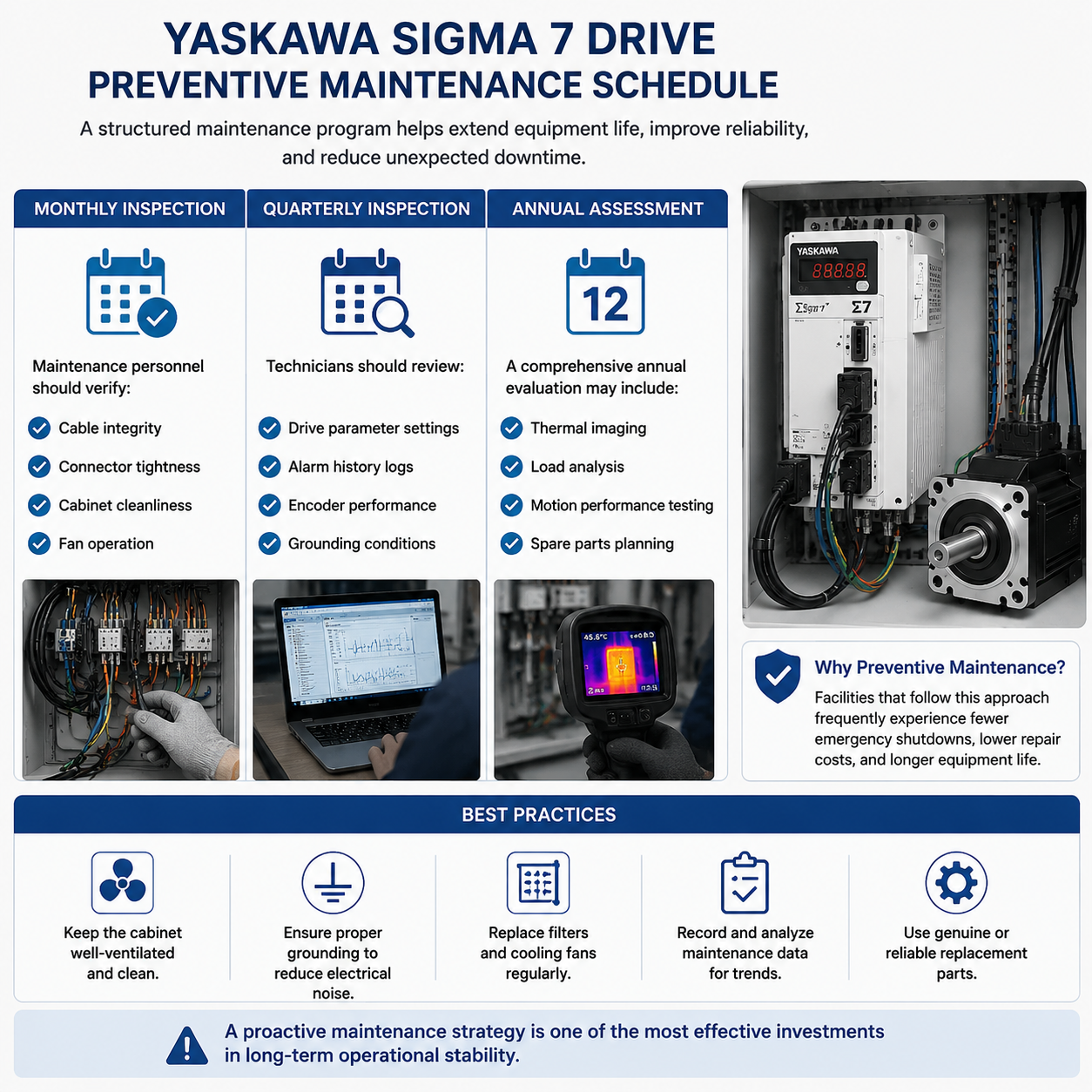
A structured maintenance program often delivers better results than responding to alarms individually.
Monthly Inspection
Maintenance personnel should verify:
- Cable integrity
- Connector tightness
- Cabinet cleanliness
- Fan operation
Quarterly Inspection
Technicians should review:
- Drive parameter settings
- Alarm history logs
- Encoder performance
- Grounding conditions
Annual Assessment
A comprehensive annual evaluation may include:
- Thermal imaging
- Load analysis
- Motion performance testing
- Spare parts planning
Facilities that follow this approach frequently experience fewer emergency shutdowns.
Sigma 7 Drive and Sigma-V Motor Compatibility
Many industrial systems combine Sigma 7 drives with servo motors from different Yaskawa generations.
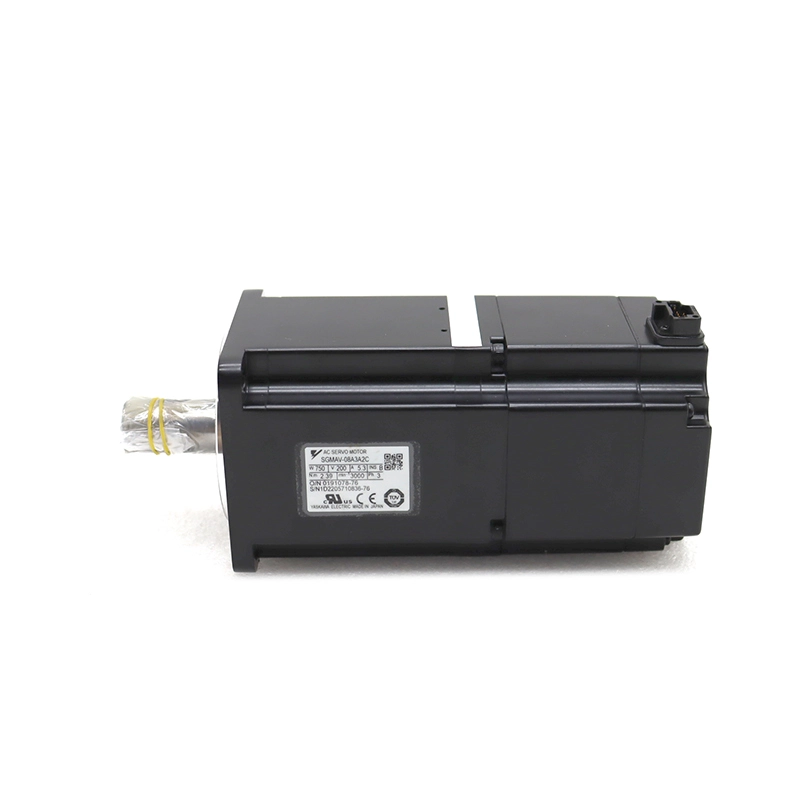
One example is the SGMAV-08A3A2C Sigma-V low inertia servo motor, which remains widely used in CNC equipment and automated machinery.
When evaluating system performance, maintenance teams should inspect both the drive and the motor.
A fault appearing to originate from the drive may actually result from:
- Encoder degradation
- Motor bearing wear
- Brake failure
- Mechanical loading issues
Understanding the complete motion system helps improve diagnostic accuracy.
When Repair Is No Longer Cost Effective
Not every drive should be repaired.
In some situations, replacement offers better long-term value.
Warning signs include:
- Repeated hardware failures
- Obsolete electronic components
- Limited spare part availability
- Escalating repair costs
At this stage, sourcing a tested replacement unit can reduce future maintenance risks and improve overall reliability.
How DUOMI CNC Supports Automation Maintenance Teams
Maintaining legacy automation systems often requires access to hard-to-find components.
DUOMI CNC supplies:
- Yaskawa servo drives
- Sigma-V servo motors
- Siemens automation parts
- Fanuc spare parts
- Allen-Bradley components
- Refurbished and new automation products
For engineers managing aging production equipment, rapid access to replacement components can help minimize costly downtime.
FAQ
Under normal operating conditions and proper maintenance, many Sigma 7 drives remain in service for more than 10 years. Environmental conditions and workload significantly influence lifespan.
What is the most common cause of Sigma 7 drive failure?
Overheating is one of the most common causes. Poor ventilation, clogged filters, and failing cooling fans can accelerate component degradation.
Can electrical noise damage a servo drive?
Electrical noise usually causes communication issues and instability rather than immediate damage. However, long-term interference can affect reliability and system performance.
Is preventive maintenance really necessary for modern servo drives?
Yes. Preventive maintenance helps identify developing problems before they trigger production interruptions and expensive emergency repairs.
When should a Sigma 7 drive be replaced instead of repaired?
Replacement should be considered when repair costs become excessive, spare parts are unavailable, or failures become increasingly frequent.
Conclusion
Successful automation maintenance is not about responding faster to failures. It is about preventing failures from happening in the first place.
By monitoring early warning signs, controlling environmental conditions, and implementing a structured maintenance program, manufacturers can maximize the reliability of their Yaskawa Sigma 7 drive systems while reducing downtime and maintenance costs.
For facilities operating legacy or high-demand automation equipment, a proactive maintenance strategy remains one of the most effective investments in long-term operational stability.


 by
by